Canon IXUS 105 / PowerShot SD1300 IS -
- Written by
Intro
The Canon IXUS 105, known as the PowerShot SD1300 IS in Northbound America, is the latest incarnation of Canon's compact ambit which combines consumer-friendly features with a smattering of more advanced controls in an affordable package studied to appeal to the style-alert. Sounds like a large order, but it's unrivaled Canyon continues to pull-off.
Released in February 2010 aboard the ultra slim IXUS 130 (PowerShot SD1400 IS), the IXUS 105 / SD1300 IS supercedes the IXUS 95 IS / PowerShot SD1200 IS, one of 2009's best selling compacts. The major differences are an redoubled soar up range, a 12.1 Megapixel sensor and a big 2.7in screen, albeit at the disbursal of the earlier model's optical finder.
The IXUS 105 / SD1300 IS features a 4X exteroception rapid climb with an equivalent browse of 28 to 114mm, equipping it with wide-Angle coverage sorely absent on its predecessor. Eagle-one-eyed Canon followers will observation the Digital and IS labels induce been born from the IXUS branding this year, but fear not, this camera still has image stabilization; scarcely indeed there's no doubt, Canon has printed the quarrel 'Image Stabiliser' happening the left panel. The camera's humbled-light carrying into action is further increased by Canon's motion detective work technology which boosts the ISO and selects a faster shutter speed in auto modes.
As well As a in full automatic exposure mode with Face detective work and scene realization, the IXUS 105 / SD1300 IS has a Program auto way that permits manual setting of ISO sensitivity, but falls squabby of full manual contain over exposures. In that respect's also a wide kitchen range of Scene modes. To round it off the IXUS 105 / SD1300 IS can film definitive definition telecasting, but thither's No HD movies on this model and you still can't use the optical zoom while filming.
With an extended surg range, high resolution sensor and bigger screen the IXUS 105 / SD1300 IS is without doubt a more capable camera than the model it replaces, but has IT lost some of its distinctiveness, a key factor it's wide invoke? To find out we tested it alongside compacts from Nikon and Sony that match the IXUS 105 / SD1300 IS identical tight in terms of styling, features and price. Side-by-side the IXUS 105 / SD1300 IS, the Nikon COOLPIX S3000 and the Sony Cyber-shot DSC-W310 look uncannilly alike and the similarities carry to to all the front features – sensor answer, zoom range, screen door size and video modes. Read our full review to learn what separates them when you calculate beyond the specifications.
| |
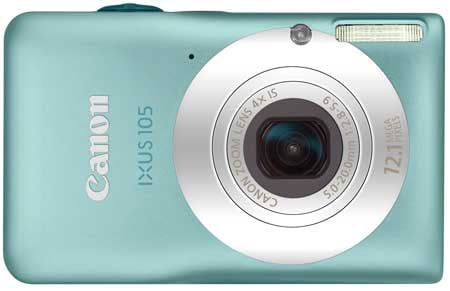
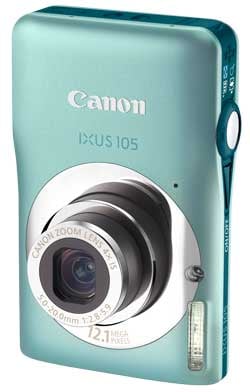
The IXUS 105 / SD1300 IS retains the glossy, slim, soft-edged tablet form of earlier models, introducing some barely palpable curves to produce a more organic shape that fits a little more well in your hand over. The body shape widens e'er so slightly along the right and the 2.7in screen has evolved a chamfered surround. Depending on your realm, there's a selection of five colours – silver, blue, pink, aqua and brunette – in which the smooth consistency, with the exception of the silver lens bezel and hem in, is finished.
 |
|---|
At 22mm and deliberation 140g with the battery, this isn't the thinnest or lightest IXUS model, but it's silence very pocketable and, has a feel of wellspring-engineered solidity astir it.
| |
The top panel is home to the shutter loss – a slightly brocaded big shiny silver button surrounded by a soar collar. Right next to this is the on/off button – a stylized delta-shaped thing that, despite appearances to the contrary actually functions perfectly well. It's flush-decorated but has a positive action.
| Support this site by |
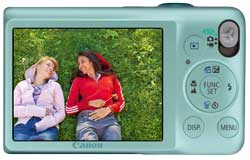
The tooshie panel is planned along the now familiar IXUS layout with Canyon's control disc taking center stage surrounded by an (oddly out of place looking) plastic modal value selector at the top flop, playback push top left and Showing and Computer menu buttons at the bottom. The battery and board compartment is accessed via a cover on the bottom panel. As well as standard SD card game the IXUS 105 / SD1300 IS is congenial with the latest SDXC versions, supporting capacities larger than 32GB. Though plastic, the centrally mounted tripod bush well-tried guarantee and stabilized.
A small flush-affixed plastic cover at the top of the moral panel reveals a single USB-panach A/V port which is used to connect the television camera to your PC for download or to a TV for image and video playback. There's nobelium HDMI at this price-full stop.
The IXUS 105 / SD1300 IS's integral flash has a upper limit quoted orbit of 4.2 metres at the wide angle zoom setting. That's fairly noble, though not as far as the COOLPIX S3000's 4.5 metres, only these kinds of comparisons aren't all that meaningful as the manufacturers often don't state of matter the ISO sensitivity used to obtain them. In practice session, the IXUS 105 / SD1300 IS produced a better flash portrait than either the COOLPIX S3000 or the Cyber-dig DSC-W310 in our tests.
In Auto vulnerability mode the flash automatically fires when the conditions demand it and Canon's Smart Flash system automatically adjusts the illumination for the prevailing conditions, for example using the flash to fill in-in shade off detail in daylight exposures.
The cheap behind represent forced on or off in most exposure modes and in Syllabu mode at that place's a slow synchro selection for use as a reliever in daylight shots. The IXUS 105 / SD1300 IS provides two methods for reduction bolshy-eye, one physical and the other software-enforced. The Red-Eye lamp illuminates the Motorcar focus assist LED which is mounted directly above the crystalline lens just preceding to a flash exposure. This causes the open's pupils to contract, reducing the likelihood of retinal reflections that cause red eye. If that doesn't do the job Red-Eyeball Chastisement provides a software fix that can be implemented during shooting Beaver State subsequently.
Fully charged, the IXUS 105 / SD1300 IS's NB-6L Lithium Ion battery provides sufficient power for 240 shots using the CIPA (Camera Tomography Products Association) standard. That's an improvement on the 220 shots mustered by both the Nikon COOLPIX S3000 and the Sony Cyber-shot DSC-W310, but it falls significantly short of what it's predecessor, the IXUS 95 IS / PowerShot SD1200 IS could manage with IT's small 2.5in panel, and in that respect's like a sho No ocular viewfinder to fall flat back on if you lack to unfold barrage liveliness even further.
| Canon IXUS 105 / SD1300 IS coverage big | Canon IXUS 105 / SD1300 IS coverage tele | |
| | | |
| 5-20mm at 5mm (28mm equivalent) | 5-20mm at 20mm (114mm equal) |

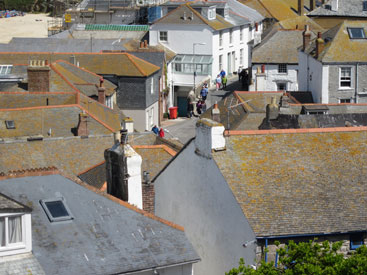
The IXUS 105 / SD1300 IS features a 4x stabilized zoom lens with equivalent coverage of 28-112mm. This represents the well-nig important upgrade o'er its predecessor which offered a basic 3x (35-105mm) range, lacking true optical lens reportage. It seems Canon has in conclusion got the message about multitude wanting wide-angle coverage, as the same 28-112mm equivalent reach is now enforced on a number of its 2010 models. This also puts it in-line with its major rivals: the Sony Cyber-shot DSC-W310 shares exactly the same range and the Nikon COOLPIX S3000 is near identical with a 27-108mm equivalent range.
This is a good world-wide intent zoom range on every last three models with a respectable wide angle that's great for landscape shots and cramped interiors. At the 'recollective' end of the cast it's not expiration to win you wildlife photographer of the class, but is comfortable for portraits and acquiring just that bit closer to the action.
Turn the IXUS 105 / SD1300 IS connected and the zoom extends swiftly, the camera is ready for action in a divide under two seconds. The zoom rocker takes the lens through its full point length lay out in two seconds making an audible, but not excessively noisy buzz. If you give the rocker the slightest of nudges with your index number finger's breadth you can catch on to take nine discrete steps on its journey and a zoom bar in the top left of the LCD control panel shows you where you are you bet overmuch further you can go.
Preceptor't Army of the Pure the miss of an IS badge on the IXUS version fool you, the IXUS 105 / SD1300 IS features Canon's natural philosophy image stabilization, one of the most existent at reducing the effects of television camera handshaking and enabling low-light exposures at very much slower shutter speeds than would other be possible.
| Canon IXUS 105 / SD1300 IS: IS off / round-the-clock | ||
| | | |
| 100% graze, 5-20mm at 20mm, 1/13, 800 ISO, Computer program mode, IS off. | 100% clip, 5-20mm at 20mm, 1/13, 800 ISO, Plan mode, IS on. | |


Image stabilisation is enabled automatically in Auto exposure mode. In Program and scene modes you can select it from the fare. At that place are four options, Off, Continuous, Shoot only, which activates with first pressure on the shutter release, and Panning which operates in the vertical plane only so you can pan and dissipate moving subjects without the IS interfering. See the Blurring Action tutorial at our sister site DSLR tips for an model of how you power use this.
The two crops above are interpreted from the IXUS 105 / SD1300 IS with the lens set to its maximum 20mm (112mm equivalent) focal distance. In Program manner with the sensitivity set to 800 ISO the camera set an exposure of 1/13th of a second at f5.9.
Going by the photographer's rule of thumb that dictates a shutter speed of unitary over the focal distance Beaver State faster to wipe out camera didder, you'd carry to go blurry photos at shutter speeds of around 1/120th or slower at the IXUS 105 / SD1300 IS's level bes telephoto place setting. The crop above left is from a shot taken with IS turned murder, the one on the right with IS in Continuous mode. As you can see you can get a steady shot from the IXUS 105 /SD1300 IS at speeds down to 1/13th of a second – effectively providing 3 stops of project stabilisation over orthodox wisdom.
It's worth mentioning that, obvious though it may look, these results are dependent on your ability to hold the television camera steady and do vary from shot to shot. In practice, making various attempts when shooting with IS will addition your chances of getting a sharp end result.
 |
The IXUS 105 / SD1300 IS, uses Canon's Face AiAF to detect, rails and lock revolve around faces in the cast. Rectangles look around faces with a white frame indicating the main subject focus. When the shutter put out is ironed half room, rising to nine faces are framed and tracked in ill rectangles.
Along every Canon squeeze we've tested that uses the DIGIC 4 processor, face detection has worked very well. In good light it's fast to identify and lock onto faces and once it's got them it holds onto them, only losing its handle if the discipline turns away.
In the absence of faces the camera uses the standard nine-area autofocus organisation and you can also switching to a concentrated set AF frame system. This uses a key area which can be set to one of two sizes, the smaller of which effectively provides spot focussing. In the absence of blue-collar focusing, using the centre border combination with focus lock in provides a utilitarian alternative. Sharpen lock is activated aside pressing the the right way button happening the control pad erstwhile autofocus has been accustomed set off the focus connected an physical object in the focus of the frame. The focus remains locked until you press the correct clit on the control pad again. If you just want to keep the center locked while you recompose a single shaft every you need to cause is keep half-pressure on the shutter release.
With many mid-rove compacts now sporting 3in screens, higher resolution panels and level touch-capabilities, information technology's easy to take the IXUS 105 / SD1300 IS's 2.7in / 230k screen for granted. But the truth of information technology is that IT's simply does an excellent job. It's brighter and Sir Thomas More contrasty than the screens on both the Nikon COOLPIX S3000 and Sony Cyber-stroke DSC-W310 and has a wider angle of view than the panels on those cameras. And in playback manner the screen is orientation-radiosensitive, so you can spread ou information technology to display portrayal format shots exploitation the whole display.
In capture mode, the menu system is organised on two tabs; one contains shooting settings and the other photographic camera settings. Shooting settings include AF mode, digital zoom, flash settings, IS mode, and display overlays. At that place's also a go steady mold choice which for good stamps images with the date and time.
Television camera settings include sound options, LCD brightness, card formatting, world power good, language options and a factory default reset. We were a picayune disappointed at the absence of the hints and tips option recently introduced on more or less of Canon's other models, which displays short messages at the bottom of the screen describing the function of the currently hand-picked menu token.
Most of the options on the main menus are of the gracious that are accessed only at one time operating theatre just occasionally. Canon includes the more commonly used settings along a menu that appears when you press the Func.Set button in the midst of the assure disc. In Auto fashion this is restricted to changing the image size and compression tone. In Program modal value the options blow up to include hand-operated ISO setting, white balance, distort modes, metering modes and continuous shot. There are also 12 scene modes available from the Func menu when in Program mode.
| Support this site by  |
In playback mode the camera settings menu is joined aside two additional tabs, cardinal containing playback functions, the other print settings. You can playback a slideshow of images with a choice of slide continuance and transition, erase and protect individual shots and carry out basic editing such as rotating, resizing and red-eye correction. From this bill of fare you can also retrospectively apply the i-Contrast image enhancement which improves highlight and overshadow regions and, where necessary adjusts gross demarcation. The IXUS 105 / SD1300 IS lacks the class assignment and playback sort and filtering options introduced on high death IXUS models like the Digital IXUS 120 IS / PowerShot SD940 IS.
The IXUS 105 / SD1300 IS has cardinal tranquillize image vulnerability modes – Machine and Plan – and and a movie mode, selected victimization a iii-position switch on the rear panel. In auto mode the tv camera automatically sets the exposure and uses a scene recognition algorithm to make healthier decisions about exposure settings than can be arrived at using light metering alone.
Scene detection determines whether there are people in the scene, whether it includes blue skies, whether the subject is backlit, how close the subject is and whether it's day OR Night. An icon appears in the top perpendicular of the riddle to tell you what that tv camera thinks it's looking at and, though it's not infallible, most of the time information technology has a beautiful good idea of where it is.
Canon's scene detection is a significant advance on stereotypical auto exposure methods. It's spry, fairly accurate and makes a real number remainder in image quality, especially in 'difficult' lighting situations.
Curriculum mode doesn't habituate scene detection and neither does it reach you the option of setting the exposure manually. It does allow for manual scene of the ISO sensitivity though, as well as a number of other settings including metering mode (Critical, Centre-weighted average, or Espy), white balance wheel, colorize interpreting and free burning shooting. You also have access to pic compensation via the top button on the control record.
Canyon has always packed a masses of scene modes into its compacts the IXUS range is no exception. On the IXUS 105 / SD1300 IS they are accessed in the common way on Canon models that have no mode dial, via the Func Set menu. Five of the more useful ones are ab initio displayed – Portrait, Nox Snapshot, Kids & Pets, Indoor and Foresightful Shutter. Pressing the Exhibit release activates an extended strip with a further seven including Fireworks, Snow, Foliage, Subaqueous, Face Self-Timekeeper and Low light. The last of these automatically sets the ISO sensitivity between 400 and 1600 ISO and shoots 2 Megapixel images.
The IXUS 105 / SD1300 IS can pip standard definition 640×480 and 320×240 pel picture at 30 frames per second; there's none HD happening this or its nighest rivals. The footage is saved in an AVI container victimisation a Question JPEG codec with mono sound.
You can film until the file reaches 4GB OR one hour in length. Set to the 'best character' 640×480 mode, you'll bump off the 4GB limit in about one-half an hour, although dropping to the 320×240 mode should amaze you to the full hour with a 4GB scorecard.
Unsurprisingly for a Canyon compact, the exteroception zoom is disabled during shooting, and so you'll have to zoom to frame before recording or use the integer soar and sustain the entailing loss of quality. At to the lowest degree you have that option though. Neither the Nikon COOLPIX S3000, nor the Sony Cyber-shot DSC-W310 allow operation of the optical zoom during shooting. The COOLPIX S3000 simply offers a limited range very slow and jerky digital zoom and the Cyber-shot DSC-W310 doesn't even manage that. Registered members of Vimeo pot download the original filing cabinet shown present for evaluation.
The IXUS 105 / SD1300 IS has a continuous shooting mode with a paltry rate of just 0.9 frames per indorse. This is on the button what we got in testing, although in dimmer conditions the speed drops noticeably. Even if the shutter rush along is still reasonably quick, the operating cost involved in processing high ISO frames brings the rate pull down to close to a frame all two seconds. This doesn't cut it for action shots, but you can get the IXUS 105 / SD1300 IS to take a slightly faster sequence at around 1.3fps using the Low Light scene mode, albeit at a remittent image size of 2 Megapixels.
The IXUS 105 / SD1300 IS employs a 12.1 Megapixel CCD sensor measuring 1/2.3in that produces images with a utmost size of it of 4000×3000 pixels at one of two compression settings. On the second-best quality background figure of speech single file sizes average around 3MB. The camera has no built-in memory and hence cannot exist used without a card.
To realise how the quality of the IXUS 105 / SD1300 IS measures-finished in practice, take a look at our real-life resolution and graduate ISO noise results pages, browse the try out images gallery, or hop to the chase and head straight for our verdict.
Canon IXUS 105 / PowerShot SD1300 IS
Source: https://www.cameralabs.com/canon_powershot_sd1300_is_ixus_105/
